
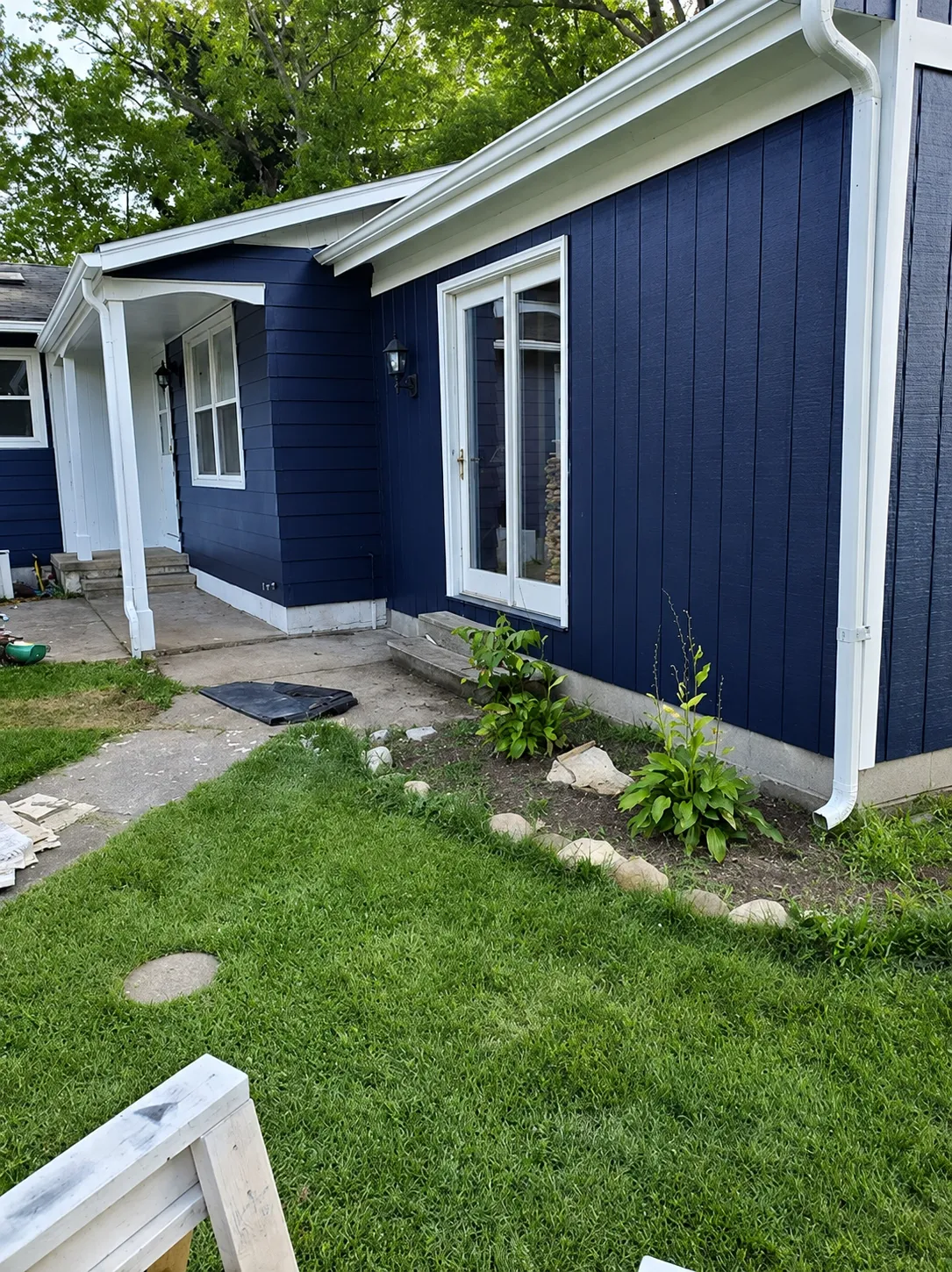
The first cool mornings of October usually raise the same question for homeowners who meant to get the exterior painted this year: is it too late? Maybe the trim started peeling over the summer, or the project simply slipped down the list.
In Northeast Ohio, exterior painting in fall is often still possible through much of October, and sometimes later during a mild stretch. The deciding factor usually isn’t the afternoon high, though. It’s what happens to the paint after the sun goes down.
It depends on the paint and the overnight low
For years, the standard guidance for latex house paint was to apply it at roughly 50°F or warmer. Many current acrylic exterior paints are rated for application as low as 35°F, and Sherwin-Williams notes that these products can extend the painting season by as much as two months in most parts of the country.
That lower rating comes with conditions. The minimum applies to the air, the surface, and the paint itself, and it needs to hold after application, not just while the brush is moving. Sherwin-Williams’ exterior application guidance recommends keeping conditions within the product’s range and above the dew point for about 48 hours after painting.
So a 62-degree afternoon doesn’t help much if the forecast calls for 31°F that night.
Why cold nights and dew cause problems
Latex paint cures as water evaporates and microscopic resin particles fuse into a continuous film, a process called coalescence. If the temperature falls too far before that process is complete, the particles may not fuse properly.
Moisture adds to the risk. On clear fall evenings, siding cools quickly and dew can form soon after sunset. When it reaches paint that hasn’t finished forming its film, the results can include:
- Tan or glossy streaks as water-soluble ingredients are drawn to the surface
- A whitish, chalky “frosting” on darker colors
- Weaker adhesion that may not appear until months later
- A shorter lifespan for the coating overall
Surface staining can often be rinsed away. Poor adhesion can’t, which is why a job can look perfect the day it’s finished and still fail early.
How fall plays out around Akron and Canton
Inland communities generally see frost before the Lake Erie shoreline does. According to National Weather Service climatology reported by News 5 Cleveland, the Akron-Canton area’s average first frost arrives around October 8, and its average first freeze around October 19. Cleveland’s averages land later because the lake holds warmth into autumn.
Those are averages, not deadlines. Some years bring a run of mild days late in October; others turn cold early. The forecast for a specific week matters more than the date.
Shorter days also shrink the useful working window. Painting typically waits until morning dew has dried and stops early enough for the final coat to set before evening dampness returns. Sherwin-Williams says most products need at least four hours of dry time before moisture settles on them. By late October, that can leave just a few productive hours a day, and north-facing walls that see little sun may stay cool and damp long after the south side of the same house is ready.
What to address now and what can wait
Worth handling before winter: bare or exposed wood, peeling trim where water can get behind the paint, and failed caulk around windows and doors. Months of wet weather and freeze-thaw cycles give moisture plenty of chances to work into unprotected wood. (For more on why this groundwork matters, see What Happens Before the First Coat.)
Usually fine to wait for spring: a full repaint of siding that’s faded but still sound, color changes, and deck staining. Stains often have a narrower window than low-temperature paints; Sherwin-Williams lists 50°F to 90°F as the safe range for exterior staining, which rules out most late-fall days here.
Targeted repairs can sometimes fit into a few good days. A whole-house repaint may need more consecutive dry days than late October can reliably offer.
If you’re doing it yourself
Check the product label for its minimum temperature, then compare it with the overnight lows for the next two nights. Look at the forecast dew point as well; a widely used rule of thumb is to keep the surface at least 5°F above it while painting. If the siding feels cold or damp to the touch, wait. After a soaking rain, give wood and masonry at least a full day to dry, since they hold far more water than vinyl or aluminum.
When the exterior season closes
Once nights settle below the paint’s minimum, exterior work generally moves to spring, while interior rooms, hallways, and ceilings can be painted through the winter.
If you aren’t sure whether your home needs attention this fall or can comfortably wait, a close look at the actual surfaces usually settles it. Paramount Painting Solutions provides interior and exterior residential painting for homes across Stark and Summit counties, and its estimates are built around explaining what a property needs now and what can wait. Free estimates are available by call, text, or online request.